How I workwith Claude
I use Claude the way a studio uses a team. I set the direction and judge the work; Claude does the legwork, inside rules I've written down. Writing those rules is the skill: a vague prompt gets template work, a precise one gets mine.
Proof: this site
I rebuilt this portfolio in one day with the setup below. My review engine scored every page, I decided what to fix and what to keep, a Claude agent made the changes, and the engine scored them again. Five rounds.
| Page | Morning | Evening |
|---|---|---|
| Home | 53 | 79 |
| Work | 50 | 81 |
| About | 54 | 85 |
| Contact | 58 | 84 |
| Services (now Skills) | 71 | 84 |
| Second Look case study | 76 | 83 |
Not every finding was taken. The engine wanted different covers and a different headline; I kept mine. Knowing which advice to ignore is part of the job.
My design process, written as a plugin
I wrote design-kit, a Claude Code plugin that turns Claude into a working designer for client web work. It has eleven skills, one per step of how I design: a brand brief, a competitor study, tokens, building the UI, looking at it in a real browser at phone, tablet and desktop widths, an audit, and a client report. A separate critic agent reviews the screenshots with fresh eyes and is never allowed to edit. Each client gets a BRAND.md that every skill reads first.
It also keeps a taste file: dated notes on what I like and what I reject, built up project by project. That's what makes every session design like me rather than like a template.
# design-kit

A Claude Code plugin that turns Claude into a working digital designer for client web work.

Per client, the kit writes a `BRAND.md` into the project. Everything else reads it first.

SKILL.mdfront desk: role, rules, routing
skills/brand-brief · design-audit · look · build-ui · tokens · reference · competitors · design-system-audit · design-report · ux-annotations · figma-bridge
agents/design-critic.mdfresh-eyes reviewer
hooks/session status line; "look at it" nudge after visual edits
A review engine that judges like I do
Second Look runs on an engine I built. It opens a page in a real browser, measures it (type, contrast in light and dark, tap targets, layout shift, load time) and sends the screenshots and numbers to a critic prompt written from my own design checklists. The score is computed in code, not by the model, so it can be explained and repeated. I calibrate it daily against sites that are known to be good.
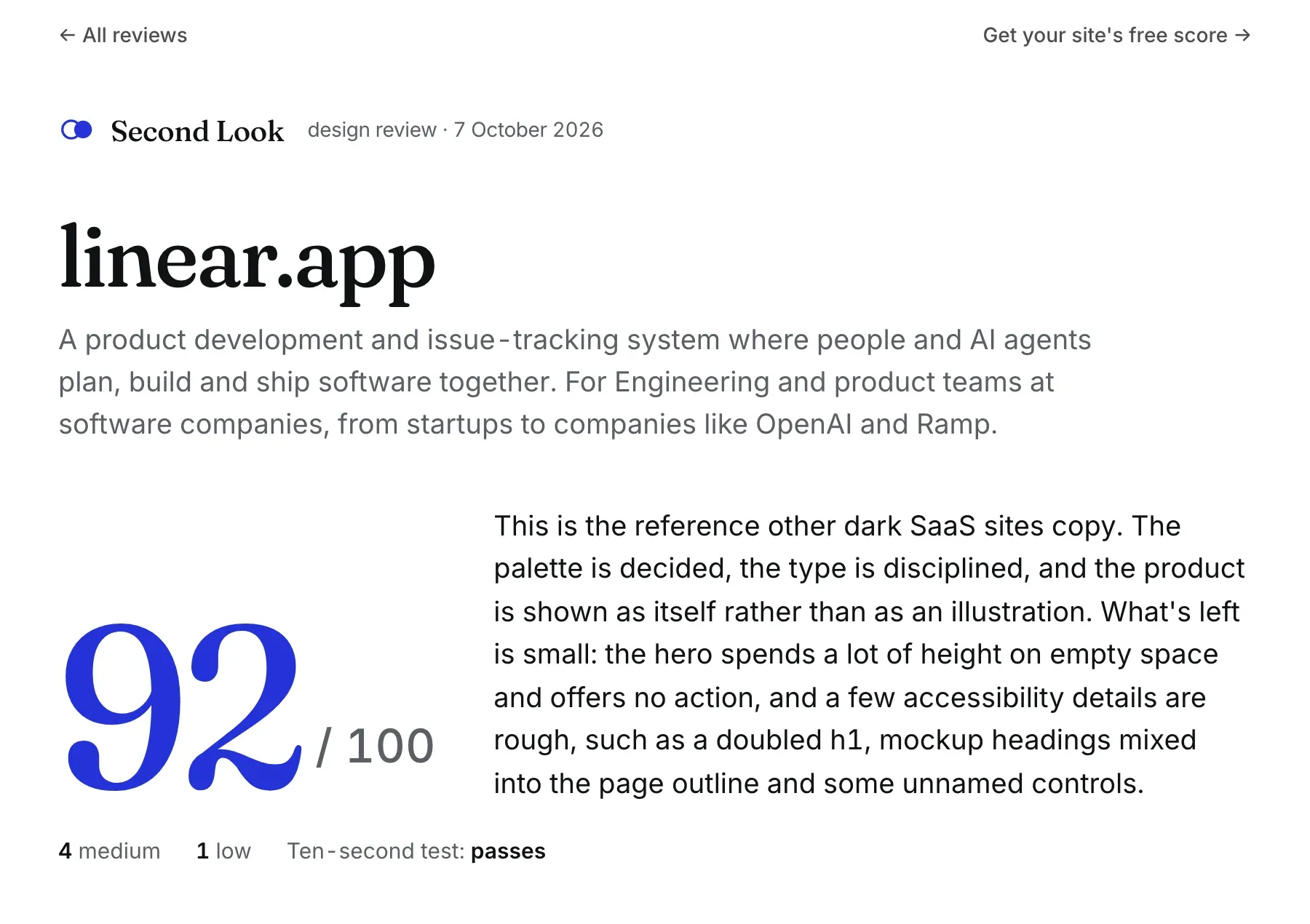
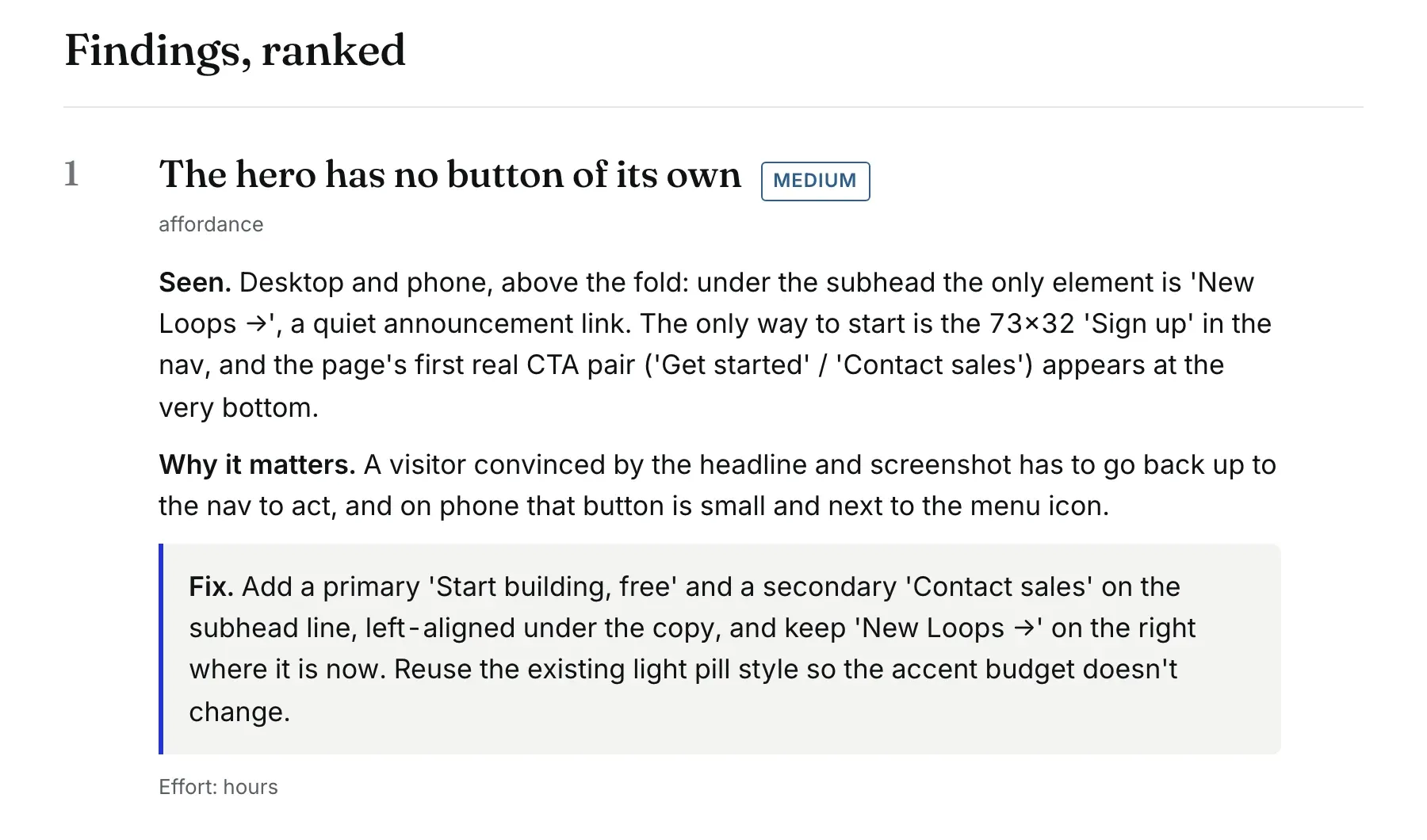
Read the Second Look case study
A studio of agents
Second Look itself is run from Claude Code. The main session makes the decisions; three agents do the work: a runner for audits, tests and deploys, a clerk that keeps the record, and a builder that builds pages once the direction is set. Repeat jobs have their own skills, and hooks make sure every decision is written down and every session starts with the project's context.
- Runner
- Runs the scripts and reports back. Audits, tests, deploys.
- Clerk
- Keeps the record: the log, the notes, the channel posts.
- Builder
- Builds and adjusts pages, once the direction is decided.
Work together
Need a designer who ships? Let's talk.
Tell me about the role or the project. I reply within one business day.