Second Look: design reviews, scored and signed
I founded Second Look: paste a URL, get a senior designer's review of your website, with a score out of 100, ranked findings and the exact fix for each. Scored by an engine I built, signed by a designer. Idea to live product with checkout in three days.
Context
Small-business owners and early founders can usually tell their website looks a bit off. They can’t tell why, and the options are bad: a free AI “roast” that hands back a generic checklist, or an agency quote for a $5k redesign. I started Second Look in October 2026 to sit in the gap: a real designer’s judgement, delivered fast enough and cheaply enough to be the obvious first step.
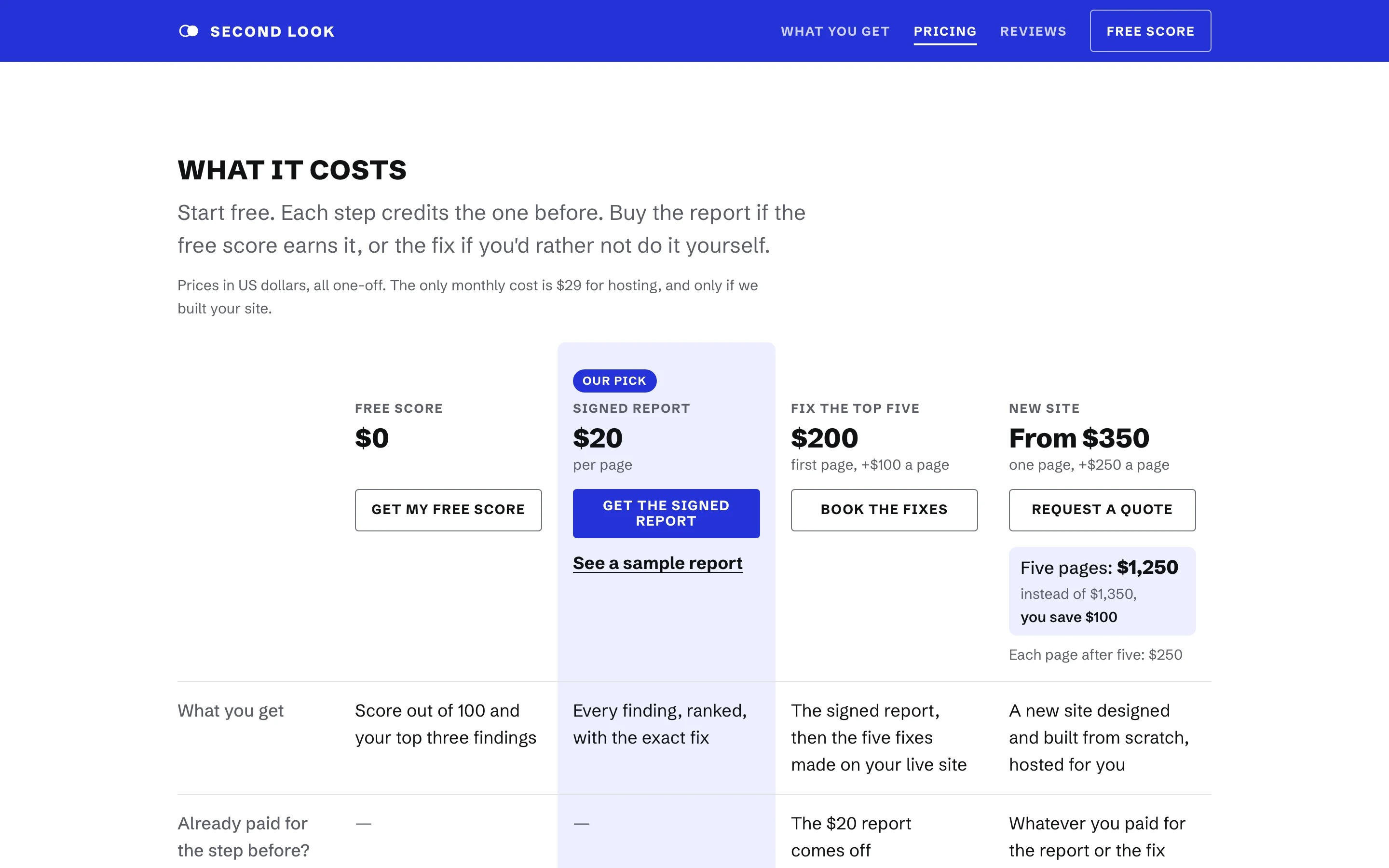
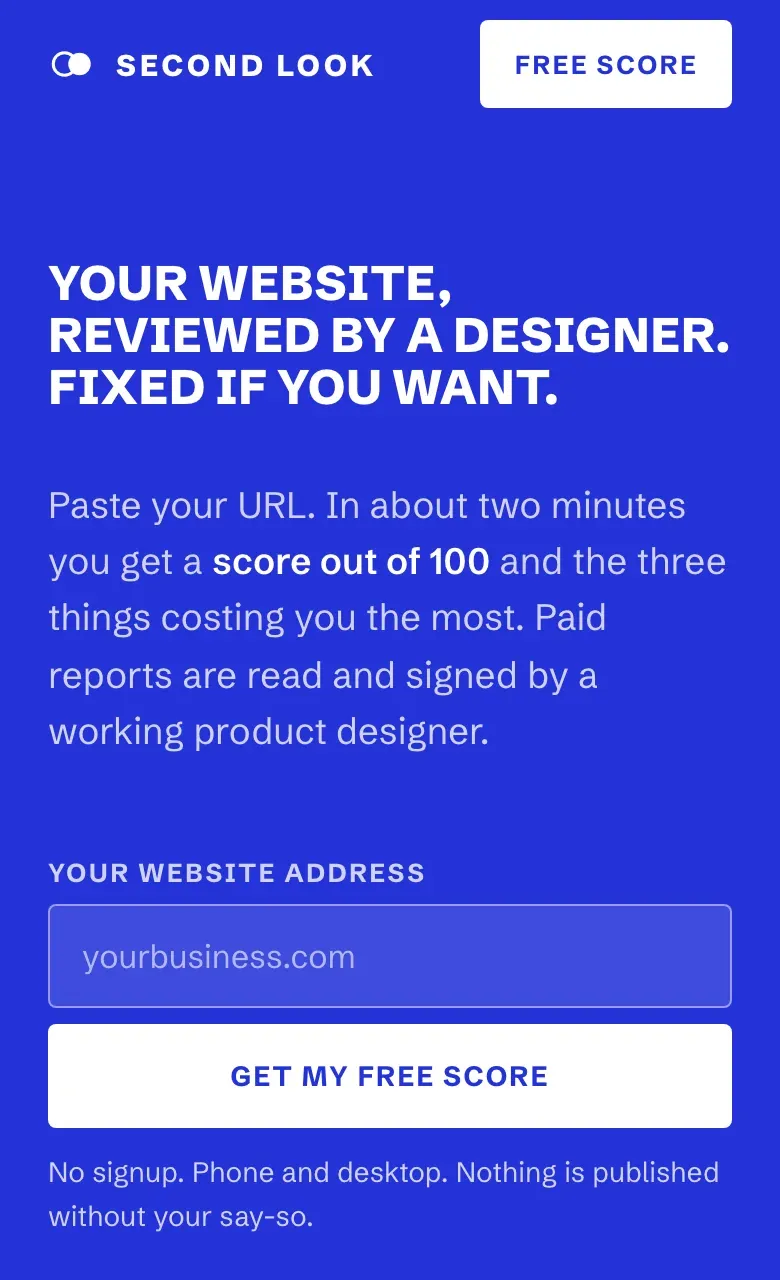
Paste a URL and in about two minutes you get a score out of 100, a one-line verdict and the three findings costing you the most. The $20 signed report has every finding, ranked, each with what was seen, why it matters and the exact fix, read and signed by a designer. If you’d rather not do it yourself, the next step is fixing the top five on your live site, then a redesign.
Problem
The research shaped everything. Four competitors already owned the “brutally honest roast” voice; most AI tools gave the same six-category checklist with findings that read as advice rather than decisions; the human options were one person and a $300 video you have to turn into tickets yourself. Nobody sold the fix, and nobody re-scored after it.
So the positioning became scored by AI, signed by a designer: calm instead of savage, specific instead of generic, and a ladder from a free score to done-for-you work where each paid step credits the one before.
Approach
- A review engine that sees like a person. I built the engine that powers it. It loads a page in a real browser at phone and desktop widths, dismisses cookie banners and pop-ups, then measures it from the inside: type sizes, line length, contrast on the real text (in light and dark mode), tap targets, every primary button in hover and focus, layout shift and load time.
- A critic built from my own method. The screenshots and measurements go to a critic prompt that’s a condensed version of the checklists I use as a designer.
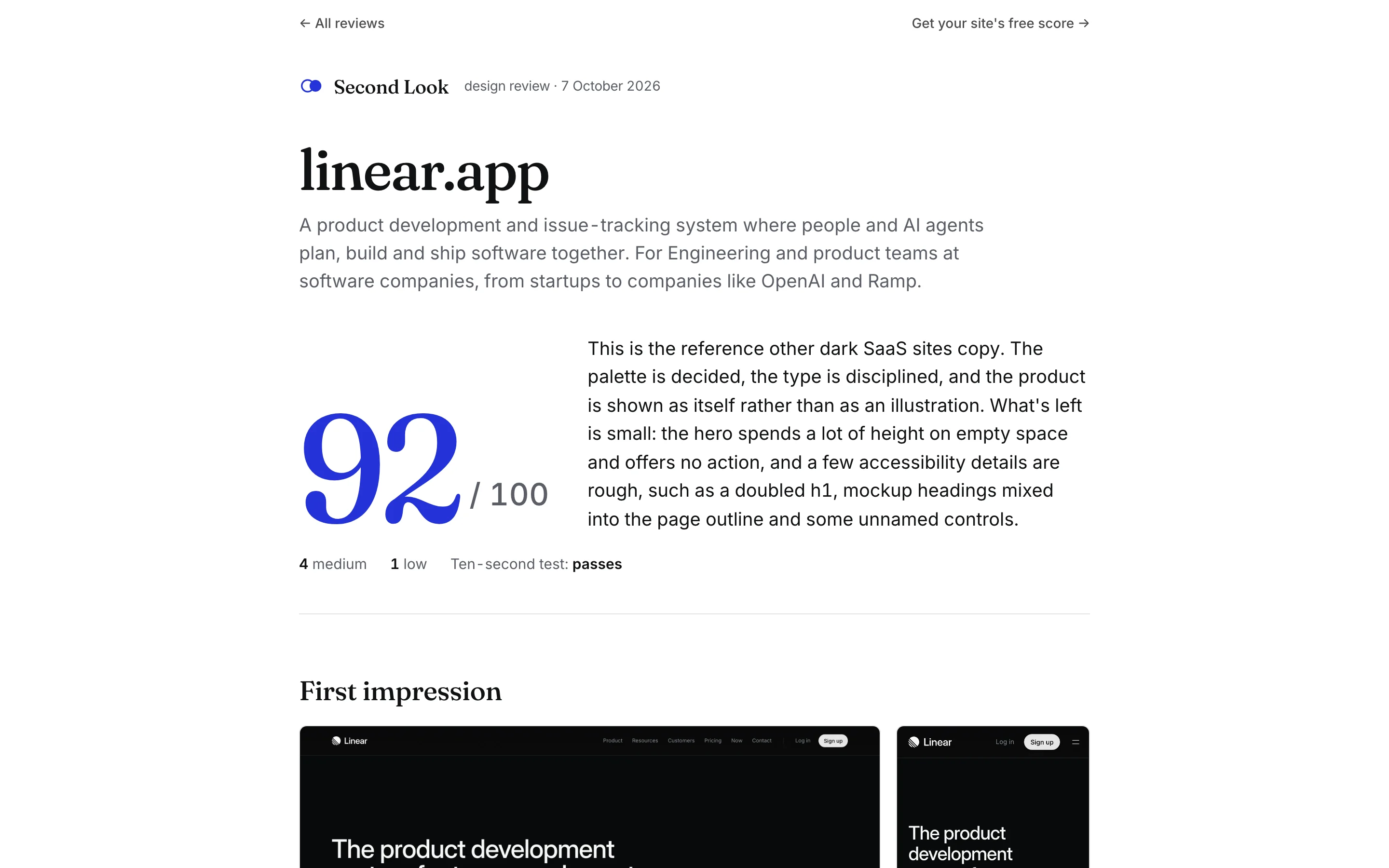
- A score that’s explainable. The score is computed in code, not by the model: a blend of the critic’s anchored craft score and fixed deductions per finding.
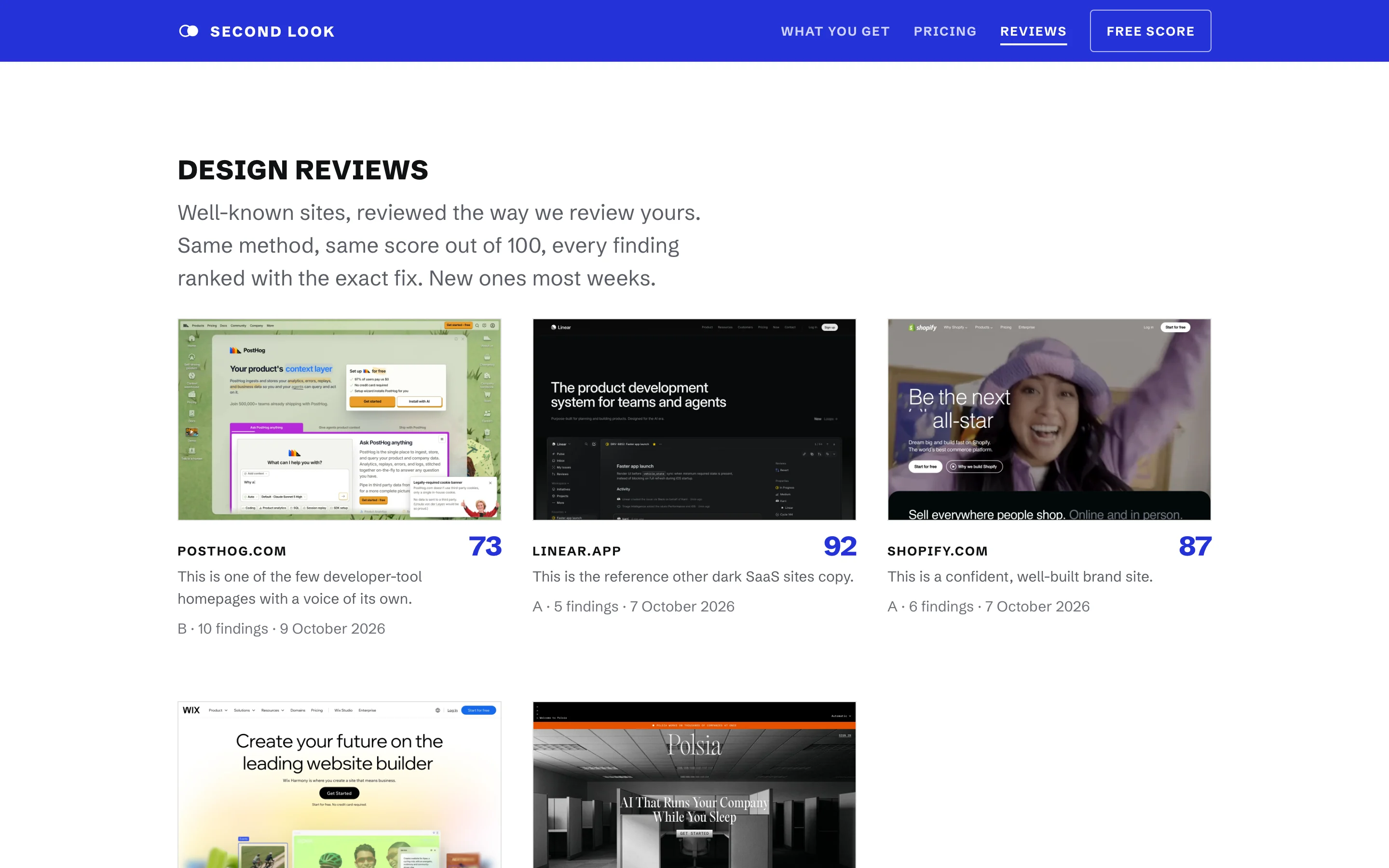
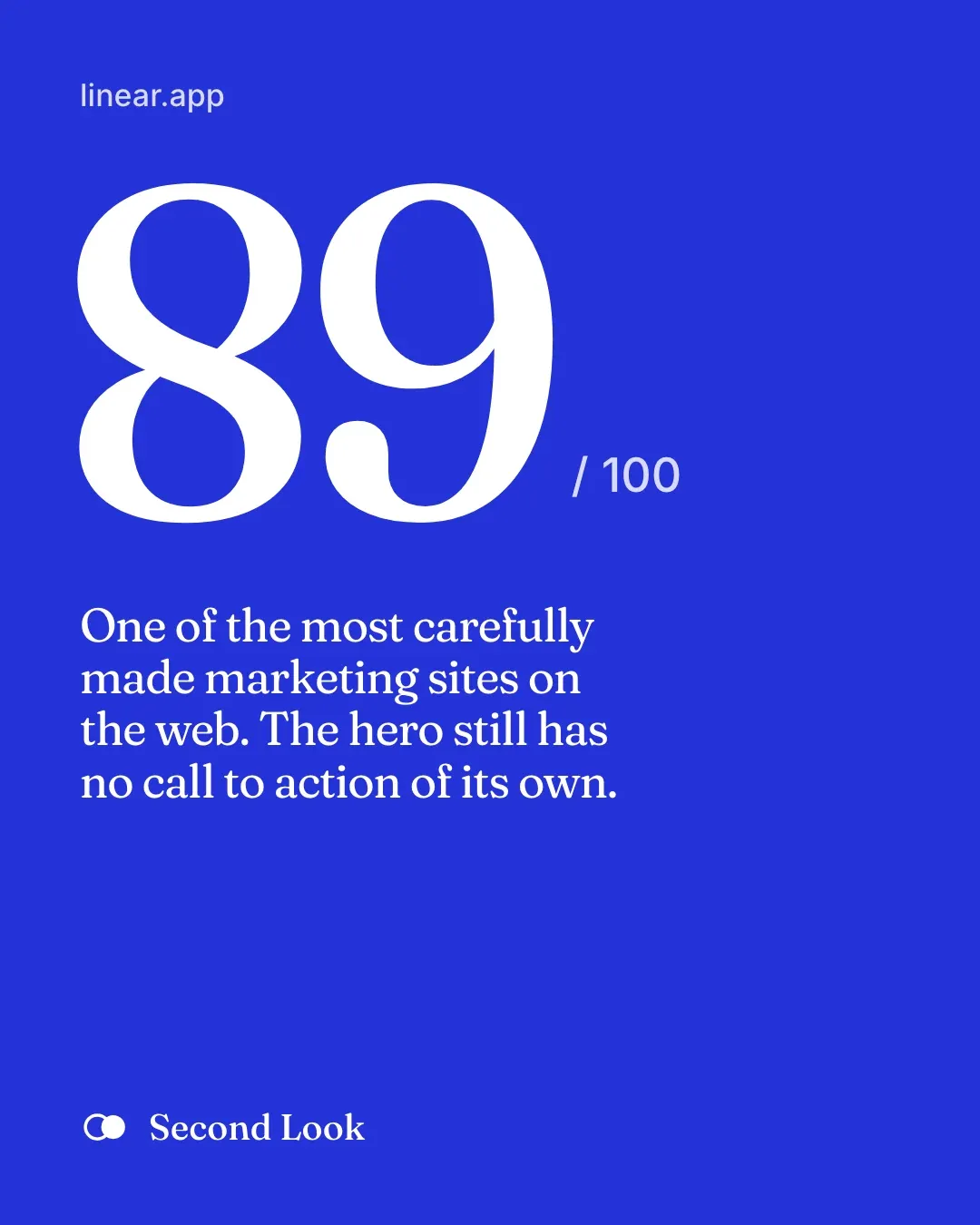
- Calibrated against the best. I run acclaimed sites through it daily.
- A brand that’s the opposite of a roast. Two circles, an outline then a filled one: the first look and the second.
- The whole business, shipped. The site is hand-written HTML and CSS on tokens, deployed to Cloudflare with one command, with Stripe checkout for each tier, Turnstile bot protection, a security pass on the API, and a pipeline that turns any report into a public teardown page and a LinkedIn carousel.
Outcome
secondlook.page went live on day three with a working free score, $20 and $200 checkouts and redesign quotes. Its own homepage scores 86 (A) under its own engine. Nearly a hundred sites have been reviewed so far (public teardowns of Linear, Shopify, PostHog and Wix, and dozens of founder sites from Reddit), and the first redesign clients are in production, each starting from their score and ending with a re-score.